Personal Finance Archives - Page 7 of 20 - Financial Literacy

Archive for Personal Finance

Central bankers want cashless banking – what could possibly go wrong?

When a hurricane hit Puerto Rico a few weeks ago, the north west side of the island didn’t have electricity for many weeks. How can you buy anything in a cashless world without electricity?

  • Banks are closed
  • ATMs are down
  • Credit cards couldn’t be used
  • No internet access
  • No cellphone service
  • No access to cryptocurrencies

There were only two ways to purchase anything: cash or barter.

The only people with cash had it prior to the hurricane.

In barter transactions, people were only getting 5-10 cents on the dollar; meaning you will lose 90-95% of the fair value of your items that you sell. Only gold and silver at coin shops had the smallest discount from fair market value.

When backup generators eventually powered the ATM machines, banks limited withdrawals to just $50/day per person.

When the electricity went down, items that suddenly became very valuable:

  • Candles
  • Gasoline and Gas containers
  • Water (for example, 30 avocados for 1 gallon of water)
  • Cigarettes (2 packs of cigarettes for labor/help)
  • Canned food
  • Chainsaws

Another note for emergency preparation:

  1. Unarmed elderly were the first targets of theft and looting.
  2. The second targets for theft were gun-free zones like schools and daycare centers.
  3. Portable generators were frequently stolen – they must be chained or guarded.
  4. Most of the casualties from the hurricane were at the hospitals due to no electricity: people needing emergency care (no dialysis, no insulin, no electrical life support machines, anything requiring refrigeration or freezing, etc.)

So when disasters strike and the electricity goes out, if you’re cashless then you are broke!

Please use this article to prepare for what you may need to survive for a month if the electricity goes out.

Are you improving your money management?

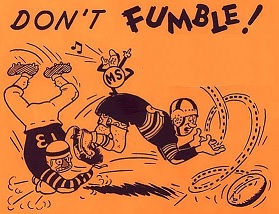
When it comes to personal finance, most people are on the two extremes; either a Money Fumbler or a Money Manager. Which one are you currently closer to?

Money Managers are people that map out their cash flows for the entire year. Money Fumblers are people that have no idea how to map out their financial life and so they take unexpected expenses on the chin. As a general rule, Money Fumblers turn anything financially favorable into a financial calamity and Money Managers use them to permanently increase their financial stability.

You must first become an adequate Money Manager before you can take advantage of:

  • Borrowing money of any kind for any reason
  • Maximize credit card points
  • Building a higher credit score to access lower interest rates
  • Juggling favorable-leverage transactions (cost of money lower than return on money)
  • Starting a business of any kind
  • No-money-down real estate
  • Even something as easy as earning a higher salary

If you fail to become an adequate money manager, then something as simple as earning more money or borrowing a little money can setup a financial catastrophe. This is because having access to more money means your bad financial habits will be exaggerated as well. I have watched Money Fumblers implode their net worth when they get a big promotion or inheritance. Some people ask me for advice on advanced financial topics even though they are uninterested in learning the financial basics. For example, a retired acquaintance lost nearly $90,000 this summer because he refused to manage the cash flow of a relatively simple real estate transaction. In another example, a neighbor’s son ruined his credit rating because he tried to pay off his car loan early but: he didn’t understand how to do it; he failed to follow-up; and he refused to ask for help. If you’re unable to pay off your car loan, how in the world could you be trusted to handle a more complex transaction?

There are financial arrangements that only benefit people who know how to manage their money. The Money Fumblers can’t help but turn victory into financial defeat. They need to work on understanding and improving their personal finances. The answer to most any financial question can likely be learned for free at your own bank or by doing a little homework of your own. The payoff for financial literacy is worthwhile: peace of mind, increasing financial stability, and increasing net worth.

Saving on musical and sports equipment

Fall brings a new school year along with possibilities for expensive band and sports equipment. Whether the kids bail out of this new activity quickly or stay for the long-term, it is best to find a low-cost option.

First, you may be aware of chains like Play-It-Again Sports and Play-It-Again Music, where you can save an average of 50% off the price of new equipment of all kinds. You may also be aware of using Craigslist but really don’t want the risk of meeting people in person. So below are several websites that are becoming increasingly popular to use:

  • LetGo.com
  • OfferUp.com
  • Facebook Marketplace
  • Freecycle.org
  • eBay.com, of course.
  • Wwbw.com for woodwind and brass instruments
  • MusiciansFriend.com for new instruments, many with discounts
  • SwapMeSports.com
  • SideLineSwap.com

For example, it is common to find nearly unused cleats for 25-75% off their retail price and a minimum of 25% off a barely used musical instrument.

A bank safe deposit box is an oxymoron

It is my best advice that you withdraw all items from your bank safe deposit box.

So, what are some of the risks of placing valuables in a bank-held deposit box?

  1. States that need money are reducing the time before your items are declared “Abandoned Property,” and confiscated. Financial assets used to be declared abandoned and taken if they weren’t accessed in 10+ years. But as states are more desperate for money, they have been reducing the threshold date. Some states, like California, confiscate in just 3 years and politicians across the country periodically try to reduce the threshold to even a shorter time frame.

2. New bank bail-in laws. Since the 2008 financial crisis, governments around the world have passed and acted on new bail-in laws that include seizing assets held in safe deposit boxes. Then you must prove provenance of how you bought it and paid all applicable taxes before the government will consider giving it back to you. I went through this once with the State of Michigan Treasury. No matter what information I provided, the government replied with additional information requests. They continued asking for additional information until they found something that I could not provide so my request to get my own money back was denied. In my opinion, the “refund process” operated like a scam, they were simply never going to give my money back.

3. The Patriot Act passed in 2001 provides extra-ordinary authority to the U.S. federal government to fight terrorism. Unfortunately, many parts of the Patriot Act are routinely employed for reasons that have nothing to do with terrorism. A federal agent can invoke the Patriot Act, and is then considered by the bank to be an Attorney-in-Fact on your account, and can access your safe deposit box without your permission. In 2002, banks changed their policies to reflect this new authority.

4. A “Banking Holiday” may be declared by the government. In the last 100+ years, anytime there has been a currency devaluation, gold confiscation, or other financial theft by the government, it is performed during a surprise banking holiday where banks are ordered closed. During this period, accounts are frozen, new capital control laws are announced, and only after the damage is done, is access to your accounts (including what may remain of your safety deposit box) given back to you.

5. Liens, lawsuits, and the IRS can all legally access your safe deposit box to satisfy their financial claims against you.

6. Mistakes, accidents, and theft. Nothing in your safe deposit box is insured or inventoried by the bank. So if anything happens, for any reason, you have no legal recourse. Lookup “safe deposit box stolen” and you’ll find countless of stories from across the country of people who claim they were ripped off; only to find they have no legal recourse.

If you have need of a safe deposit box, find a non-bank depository. Most medium or larger cities have private storage facilities and they have far fewer risks than bank safe deposit boxes. There is a reason sales of home safes explode in countries with recent banking problems (Greece, Japan, Cyprus, Germany, Ireland, and others). It is better to protect your valuables early than a minute too late.

Where did you learn to manage your money?

  • A high school course
  • Popular finance author
  • Your parents
  • Online blogs
  • Somewhere else

Since few high schools and colleges teach much about money management and investing, how have you ever been exposed to a systematic plan for making financial decisions? Sadly, many people cobble together a few ideas and muddle along in financial struggle their whole lives. I also come across high-income earners with no idea how to manage their money so they get themselves into more serious financial troubles. Extra money doesn’t cure bad financial habits, it exacerbates them.

Like anything, some people have an aptitude and interest in financial planning while many don’t want to be bothered. Either way, it is like brushing your teeth: It is a task that you must routinely perform or face painful and expensive consequences.

Start your financial literacy effort in small steps, and then continue to improve upon it. As much as I know about money and investing, I still pay to learn new methods and approaches to determine if it is something that I want to incorporate into my money management practice. Beware: Although, money management theories and practices are free all over the internet, sometimes you get what you pay for. Was it a short article written by a general freelance writer or a thorough report written by a business millionaire, professor, or financial educator?

How might you know if you have an adequate level of financial literacy?

  1. Are your financial goals on track?
  2. Are your debts shrinking or growing?
  3. Do your investment accounts have positive returns?
  4. Can you afford the maintenance and upkeep of the items that you own?
  5. Are you setting aside money for large expected purchases?

The more difficult it is for you to positively answer these questions, the more likely you need to add a little more to your financial literacy.

Age 50 is the “Red Zone” for retirement savings

At age 50 you are in the fourth quarter of your earning career and too many at this age have no notable retirement savings. This is a red-alert financial emergency situation. According to Owen Murray, Director of Investments at Horizon Advisors, “Building a nest egg is like losing weight, there are no shortcuts. People have to spend less and save more.” The likely obstacle to beginning or saving more is probably a mental one.

Peak earning years are around age 45-54, and after age 50, you’ll be lucky if you have 15 years remaining to save (health and age can limit career options over age 60). With zero in savings, some at age 50 would need to save nearly 60% of their income to comfortably retire at the typical age of 65.

Let’s look at some retirement math. In order to withdraw $18,000 a year from your retirement account for the rest of your life, at that point you’ll likely need a balance 25 times that amount, or $450,000. That is a lot to accrue in just 15 years, a savings rate of $30,000 per year. The average person making $55,000 a year will likely have difficulty achieving this. But, however difficult it may be, the alternative is far worse – retiring without adequate savings.

What do you do in an emergency? Drop everything and focus on the problem. In this case, it may mean drastically downsizing and making severe cutbacks in your lifestyle to create the savings necessary to retire. If you’re unwilling to take these drastic measures – exactly how well do you think you’ll handle the downsizing in retirement with only social security as your income, after Medicare and medical deductions? Have you looked up how much your social security income is estimated to be and by what age?

There are a few critical financial tasks for a successful retirement:

  1. All debts are extinguished. This means no student loans, mortgages, or credit card balances.
  2. You have mapped out how much money you’ll need. This is covered by social security, any pension, plus a sustainable withdrawal rate of your retirement assets. A sustainable rate starting point is 4% of the account balance per year.
  3. Expected medical expenses are covered. Paying for prescriptions and medical care is becoming more expensive and will take a larger and larger share of your income.

So if you are nearing age 50 with little to no retirement savings, now is the time to get into emergency mode and do something about it – as if your hair were on fire.

Can your bank “bail in” your money?

A colleague has a side business where he takes in cash from customers all over the country. Since banks consider this activity “too high risk,” they’ve closed a couple of his accounts. A very large bank just closed his most recent account without warning. This bank has been keeping $36,000 of his money from him for 7 weeks while they “investigate.” He told me he was going to talk to a lawyer about getting his money returned.

I replied, “I’m afraid it is not your money at all. The moment you give a penny to a bank, it is theirs to do with as they please. Legally, it is no longer your money; you are an unsecured creditor. They decide if and when to repay your deposit/loan after they take as long as they desire to investigate.” He replied, “Wow, that’s terrifying. I did not know that. I won’t leave that much money in a bank in the future.”

After the 2008 financial crisis, Central Bankers examined how they could avoid the expense of bailing out failing banks in the future. They came up with a solution, nicknamed, a “Bail In” as opposed to a government Bail Out. This is where depositors have a percentage of their money taken from them and handed to the equity in the bank to raise capital. For example, if you had $20,000 in your savings account and the bail in was for 15% then $3,000 of your savings is taken from you and handed to the equity investors of the bank (mainly to make up for losses on failing loans).

There have been bank bail-ins already in: Denmark, Austria, Cyprus, Portugal, and Greece. The European Union setup the rules for bank bail-ins and the G20 nations passed a joint resolution (including the U.S.) in November 2014. The resolution states that, “all bank deposits are now part of the capital structure,” meaning deposits are a lower-priority creditor to the bank.

But in the U.S., aren’t depositors protected by F.D.I.C. insurance up to $250,000 per account? Yes, these accounts are insured by the federal government. However, the F.D.I.C. only has $54B to insure over $6T in deposits, less than 1% of the money in a worse-case scenario. So it is insured, but that insurance is HIGHLY underfunded. The failure of one large bank could blow-out the entire F.D.I.C. fund many times over.

So, the summary of all of this is:

  1. Any money you deposit with a bank is no longer yours; you are an unsecured creditor to the bank.
  2. Your bank deposits are is insured up to $250,000 per account, but the insurance may not be there in a big recession or financial crisis.
  3. There is a possibility that a portion of your bank deposits may be taken as part of a bank-bail in in case your bank suffers too many losses. Of course, the money taken will never be returned to you.


“But everybody else is buying one!”

When you follow what everyone else is doing with their money – beware!

Really? Why?

Let’s take a look. According to the Economic Policy Institute in 2016:

  1. The median amount of retirement savings for all families is $5,000. Note that just under half of American families have no retirement savings at all, the few super-savers pull the average up.
  2. Among those families that actually have any retirement savings, their median amount is $60,000.
  3. For one more reference point: just before entering retirement, when families have the most retirement savings, the median for those with retirement savings is only $163,000.

Let’s take a look at this $163,000; is it enough money to retire on? A common withdrawal rate for retirement accounts, such that you won’t run out of money, is 4% per year. If this 4% withdrawal rate were applied to the $163,000, then your nest egg would give you an additional $6,500 per year, before taxes. This is how much you would be able to add to your social security income: just $541 per month. This small amount of income would likely make for a rough retirement. And this is why you do not want to spend like everyone else spends their money. Because then you’ll be forced to endure a rough retirement like everyone else, on a very low level of fixed income.

According to Bankrate’s annual survey on “What is your greatest financial regret?”

The number one regret for respondents was “Not saving for retirement early enough.” Out of all the possibly problems people have with money, the most painful was not saving enough for retirement. So what do you think is critically important for you to start doing today? Start your retirement savings rate at 15% of your income and slowly increase that rate as your income increases over time.

You cannot control your life until you control your money

A contractor’s work crew was doing some repairs on my house, and since I work from home, I heard the conversations of the workers all day. Their focus was on fishing, concerts, and their next tattoo while they struggled to feed their children and stay current on their rent. These tradesmen were not kids in their teens and twenties but were in their mid-to-late 30s.

As I was helping one of them jump-start their car, because he couldn’t afford a new battery, I asked him how he prioritizes his spending. I have mentioned before, the most difficult question in money management is how you go about calculating what you can afford. He replied, “When I have money then I spend it. That is it. If I have an extra $100, I get a new tattoo but I also buy one for my girlfriend so she won’t get mad that I spent money.”

Over the next few days, I asked a few questions and learned that:

  • None of them have any savings or a retirement accounts
  • Most were touch and go about making rent each month
  • Way too much of their income went to bars, alcohol, cigarettes, and lottery tickets
  • The mention of the word “investing” returned blank stares to me

There is nothing the matter with spending money on a Starbucks coffee and case of beer for the weekend. But when you have trouble making rent, every single month, it may be time for a financial intervention.

When I had to front extra money to the contractor beyond supplies to provide some advances to his crew, I remembered the saying (I believe from Robert Kiyosaki), “Those who cannot manage their money work for people who do manage their money.” This was solidified with their stories about struggle, inconvenience, and victimhood because they were so financially strapped. I offered some casual advice at opportune moments, but my impression is that it was so outside of their way of thinking and living, that it simply didn’t make any sense to them. As in, “Sure, I’ll save money when someone gives me a million dollars – haha!”

As I see it, nearly every aspect of your life depends upon money. So your skill level of money management and discipline will determine whether your life is a continual financial struggle or making progress toward financial stability.

When is the last time you interviewed a bank?

The financial institution that is best for your needs will be determined by the complexity and cost of your financial transaction types. Every bank or credit union has strengths and weaknesses, and these do change over time. There is a spectrum of services that banks offer and I periodically review and interview banks to determine if I should alter where I do some or all of my banking.

There is no one-size-fits-all all bank to keep everyone happy. There are local banks, regional banks, large money center banks, and a similar variation in credit unions. On one end you have the three largest U.S. banks – Wells Fargo, Chase, and Bank of America. They have the most resources, most technology offerings, and also the most expensive fees. Begin by matching up your needs with the banking fee schedule. Most bank websites have a fee schedule; access that to scan for the prices of services you’ll expect to be using. The next step is to list all of the features, amenities, and services that you require, and make sure that those can be adequately met by the bank. For example, one item I insist upon is next-day check clearing (banks don’t start this until a brand-new account has been open for 30-45 days). However, many banks physically cannot offer less than 2 or 3-day check clearing, ever. Another feature I prefer is a smart-phone app check deposit capability with a limit above $10,000. Only by putting all of these puzzle pieces together you can you arrive with best offering to meet your needs.

I had an account at a large bank and it seemed like if I glanced in their direction I was charged another $50. However, I was once in Asia when I had to wire 2,500 Euros to an Italian law firm within 24 hours. It was just a few online steps with my large bank – no regional or small bank could have possibly accommodated this. In another example, I interviewed a large regional bank and they were “going to debut a mobile app probably this summer,” while my primary bank account has had one for 9 years.

Even for a small business with simple transactions, research pays off. For example, earlier this year I prompted a colleague to move from a large bank to a credit union business checking account. At the prior bank, she was paying $588 a month in fees. But the credit union cost for her is now only $375 per month. Switching banks saves her nearly $2,600 a year. Was that worth 2 days of research? I think so.

Be aware that there are a few large banks and credit unions are that are removing some or all of their tellers and replacing them with super-ATMs. These new machines can perform all kinds of transactions, even allowing customers to speak to a live teller for additional services. If this doesn’t appeal to you, then you may want to confirm whether tellers will remain. One branch I interviewed reluctantly revealed their plans to eliminate their tellers soon, but only after I asked them about it.

Remember that bank policies and procedures change over time; some become more relaxed, some become more restrictive. These changes may prompt you to start a new bank search. One word the banking industry loves is “relationship.” Banks always want to upsell you with more accounts and services (relationships) because you’ll be less likely to leave them. I use the word a lot when I’m interviewing banks so they offer me more perks and benefits; you should, too. But if they no longer meet my needs best, then I move on without hesitation.

Menu Title