Personal Finance Archives - Page 11 of 20 - Financial Literacy

Archive for Personal Finance

Your success depends upon long-term thinking

cal

There is an important aspect to any decision-making, the consideration of time. Do you spend more time thinking about what you are going to do today or 2-5 years from now? Do you spend anytime thinking about 25-50 years from now? Nearly every aspect of your life can be improved by moving your evaluations and decision-making more distant in time. For an obvious example, if you want to be healthy and active in your sixties and beyond, that depends a lot on how well you treat your body during your twenties through your fifties. Other categories of your life that improve with long-term thinking include: relationships, career, and money.

I recently heard that an acquaintance is getting evicted from his apartment. None of the usual reasons for this difficulty apply to him: job loss, illness, or too much debt. He earns enough money to pay his reasonable rent, but his short-term thinking and chronic need for instant gratification prevents him from having financial stability. I happen to know that he buys a huge amount of scratch-off lottery tickets and spends many evenings at bars racking up expensive bar tabs. These two discretionary pleasures are not affordable for his level of income. I have the impression that being evicted is still not jarring enough for him to begin evaluating and changing his behavior.

In contrast, the long-term thinkers that I know are generally far more financially successful. I do not think it is a coincidence that the person I know who evaluates the furthest into the future also has 3 fabulous homes. For him, short-term thinking is 10 years out and long-term thinking is 3 generations. For all of his travel, it is planned 1-2 years in advance. From his career, to child rearing, to investing, he considers everything that may occur over the next 10, 20, +30 years and more.

Sure there needs to be some balance and immediate rewards, but most people that I know are far too short-term in their decision-making. This is crippling when it comes to finances because time is your greatest asset. And if you spend all of your money on short-term gratification, then there won’t be any money for important long-term gratification. It is my advice that you consider moving your time-frame for decision-making much further into the future for all areas of your life; particularly your finances.


How do you track your spending?

quicken

Before credit cards and loans were easy to get, the act of budgeting consisted of spending your weekly income, in cash, until it was gone. Those who were more diligent put their cash into envelopes labelled for different categories of spending, such as rent, groceries, entertainment, savings, retirement, transportation, and medical. Once an envelope was emptied, then any further spending in that category was prohibited.

Today, most people charge everything to their credit card with the best points plan and they hope to pay most of if off when they get their paycheck. Playing with debt is always a dangerous strategy, particularly if you do not have financial literacy basics, such as budgeting. The good news is that there have never been more tools available to track your spending and create a budget.

While you can still manually track your spending with envelopes or paper and pencil, there are many free software solutions to choose among. The first decision is whether you want a smartphone app, online website, or desktop software. Many vendors offer several versions of their tracking service: a basic one that is free, and then, depending upon your needs, different deluxe versions that have a monthly or annual fee. In addition, many banks and credit cards offer summaries of your transactions that you can download into a spreadsheet and sort. You can find many options by searching for “free budgeting” or “free money management.”

If you do not track your spending it is similar to driving a car around blindfolded – sooner or later you will have an avoidable accident. Whichever methods you choose to track your spending, it is something that must be done. This is the very first step in managing your money: knowing how much is coming in and knowing where it is going out. This is necessary for day-to-day cash flow planning and a longer-term overview of your financial life.

Never borrow from your 401(k)

100 bills

There are three different ways in which borrowing money from your 401(k) is a very big financial mistake. There is no reason to borrow from this account that is worth the three types of financial downsides that are listed below.

I The actual results for people who borrow:

  1. People who borrow from their 401(k) usually stop making contributions to their 401(k), or sharply reduce them. So not only have you reduced your 401(k) balance, you’ve stopped the contributions, the most important driver to reach your retirement goals.
  2. Any loan from a 401(k) is due within 60 days if you leave or lose the job for any reason. Few people can repay in this time period and so the IRS declares the loan an early-retirement distribution. This means you are charged a tax penalty of 10% on the money you withdrew. Again, many people do not set this money aside from the loaned amount and so they owe interest and penalties on the withdrawal that they cannot pay.

II The financial mechanics to your income and net worth:

  1. In order to make interest and principal payments, you earn money and are taxed on it once. What remains is after-tax income. This after-tax income is then used to repay the loan, which moves the money into a pre-tax account, an account that has not been taxed yet. So, once you are in retirement and withdrawing money from your 401(k), you are taxed on all of the money at high ordinary-income tax rates. This means you are paying income tax twice on any loan repayment to your 401(k).
  2. When you borrow money out of your 401(k), you are missing out on any potential investment growth during the loan period. This is defeating the only reason that you have money in a 401(k), for investment growth over time.

III You are mixing categories of money:

Money that is designated for your retirement money is actually for your retirement; not for a home repair, not a car, not college, and not for spending on anything else. When money is taken from savings or investments for a different purpose, it financially imperils the goals from where the money was taken. Unlike most other spending categories, there are no grants or subsidies for retirement; it is solely up to you and your contributions. If you fail to make contributions, or borrow money from retirement accounts, you are risking your capability to ever retire (at a time when most people are least able to work).

So what do you do instead of borrowing from your 401(k) when you really need the money? A few recommendations:

  1. Immediately eliminate any extraneous expenses.
  2. Act like you’re in high school and hustle for cash: cut grass, clean gutters, walk dogs, clean windows, run errands, tutoring – any service that you can perform this week with minimal marketing and supplies.
  3. Dramatically reduce your housing costs, move to a cheaper living situation because housing is normally one of our largest expenses.
  4. Implement a plan to earn more money: job search, getting certifications and other resume’ builders, network to expand your job search to other geographies/industries.
  5. If you must borrow, try to get an unsecured loan with a low-interest rate. Just make certain that the interest and principal payments to pay back the loan are easily affordable to you. Otherwise, you are putting your finances into an even worse condition.
  6. If you are interested in borrowing money from your 401(k), you are likely facing a serious financial challenge. How did this come about? How is it that you hadn’t saved or insured for this possibility? Is it really your responsibility? Whatever the reasons, you must learn from them to prevent them from occurring again. But more important, you must act immediately to address your situation using the previous suggestions.

Stop paying voluntary fees

ATM 2

In helping others with their finances, I find the people who are least able to afford anything routinely pay the most in unnecessary fees. When going over their finances to help them improve their financial stability, I am saddened by how much money they needlessly spend in extra fees. This is money that could have been applied to pay down debts and build up necessary savings.

Some of the voluntary fees they could reduce include:

  • ATM fees – plan ahead and use your own bank network
  • Late fees on bills – schedule all of your payments and use autopay
  • Exceeding phone data plan because of games and music downloads – instead of changing your plan
  • Check cashing services – find a cheaper way or get a free bank account
  • Having credit cards that charge an annual fee – most cards do not charge a fee
  • Doubling up on insurance – you may already have insurance on a rental car through your own car insurance or from the credit card that you used to pay for it, so don’t pay it again to the rental company
  • Cellphone roaming charges when traveling abroad – instead use Wifi or a pre-paid SIM card
  • Not tracking all of your accounts and then losing that money to the state as “abandoned property”
  • Directory Assistance from phone companies – I’ve seen charges from $2.99 to $6.99 for each call
  • Routinely paying for parking at a job when there are free options nearby or free/discount-validating by employer or stores

Recurring charges for services that you may not be using:

  • Subscriptions – newsletters, websites, magazines, clubs, etc.
  • Mortgage insurance when it is no longer needed
  • Safe-deposit box for items that are inappropriate to store there
  • The classic charge is an unused gym membership
  • Access to apps, music, or movie catalogs, etc. that you thought were a one-time charge that are actually recurring charges for membership
  • I also find people paying monthly fees for financial services that they are not using:
    • Financial planners not doing anything
    • Bank trust departments not doing anything
    • Transaction tracking software they do not use
    • Financial consolidation services they could easily do on their own
    • Very expensive tax preparers completing a simple tax return

There was one acquaintance I was helping and he was paying around $50 a month in ATM fees and another $11 to have a bank account. He paid cash for most things but he’d only withdraw $20 at a time at ATMs; each time a charge of $2-$4 in fees. His banking routines costing him $61/month adds up to $730 per year. This is more money than he had ever saved in his life! Instead of volunteering to pay the ATM machine owner he could build his savings account instead. This is just 1 unnecessary fee that he was volunteering to pay; there were several that I discovered for him. When you’re not paying attention to small financial details, these tiny fees can invade, build up, and consume far too much your income. At least once a year, go through all of your statements and expenses to locate any voluntary fees that you can stop paying to others. Instead, accumulate them in your savings account.

Taxes for retirees

Turbo Tax

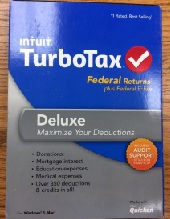
Many financial plans for retirement dangerously ignore income taxes. There are several taxes and penalties for retirees, and you need to incorporate them into your plan so you know what you can and cannot afford to do in a sustainable manner. Below are some items that you need to include in your calculations.

1. Social Security is tax-free only if your adjusted-gross income is less than $32,000 (for a joint tax return). If your adjusted gross income (joint) is between $32,000 and $44,000, then 50% of your social security income is taxed at ordinary income rates. If your adjusted-gross income (joint) is over $44,000, then you pay ordinary income tax on 85% of your social security income.

2. There is an Obamacare 3.8% sur tax for those whose adjusted-gross income is over $250,000 for someone single. This sur tax is for capital gains, selling anything for a profit. Before you say, “that doesn’t apply to my income level,” remember that your income may get some large boosts with: withdrawals from a 401(k) or IRA, or if you are selling a second home, rental property, or business interest.

3. Withdrawing money from qualified retirement accounts before age 59 ½ will result in a 10% tax penalty. Far worse is the 50% tax penalty if you fail to make a minimum required distribution from your IRA once you are age 70 ½.

4. Medicare Part B charges you an increasing amount of money, the higher your adjusted gross income may be. Medicare is deducted from your social security retirement payment. This extra-monthly tax starts at $85,000 for singles of $121.80, and maxes out at $268.00 per month for singles earning over $129,000.

All states have different tax plans that affect retirees. There are several tax-related policies you should be aware of and if they may apply to you:

  • Interest and dividends taxed? Are there any limits?
  • Social security retirement pay taxed?
  • Pension payments taxed? Are there any limits?
  • Military pay or disability pay taxed?
  • Inheritance and Estate Taxes?

It is no surprise that retirees move to another state or location after they retire to reduce their tax burden. I have a retired relative who just purposely moved to a state for their no-income tax policy and it will save him nearly $40,000 every year.

A thorough retirement plan will have all of these tax elements mapped out for your particular circumstances. The alternative is to retire and discover too late that high taxes in your state or type of income is unaffordable, and then you have to go back to work. A neighbor discovered this three years after he retired. He and his wife moved to an expensive city with high property taxes, so he was forced to go back to work. Unfortunately, he is bitter about it and having difficulty with the physical demands of the job.

Avoid long-term care insurance plans

long term insurance

Insurance plans that cover custodial care at a nursing home is a failed business model; and it is now showing up in unaffordable insurance premiums.

First, a little history on long-term care insurance plans. Back in the 80s and 90s, government budgets were struggling with increasing numbers of people on Medicare and Medicaid. One of the most expensive health services is providing full-time care to someone unable to care for themselves. To reduce the number of people receiving money for this care, states tried to offload them by providing favorable terms for insurance companies to offer a new product; called long-term care. This insurance product would financially support people who needed temporary full-time care so the government wouldn’t have to pay for it. As part of the program, Medicare and Medicaid wouldn’t start until all of someone’s assets were fully depleted to pay for their care.

Insurance companies tried setup long-term care policies but there is a problem. Actuarially, the plans could only support people for a maximum of 3 years and remain slightly affordable. While some policy holders needed care for less than three years (where the insurance worked for them), a huge number of policy holders needed many more years of care. So there are lots of people who paid for the insurance, ran through it in 3 years, and still lost all of their savings to pay for their government care. (I mention in my book that you are better off self-insuring for the 3 years that these plans last.) It turns out that insurance companies failed to take into consideration the increasing longevity and increasing cost of health care. These two components have tripled the already-expensive premiums on these insurance policies. Even with these high premiums, insurance companies are still losing billions on these policies and many have abandoned long-term care. Genworth alone loses over $100 million a year on their long-term care policies.

As the math is catching up with insurance companies, consumers are feeling the pinch. Some policies have increased their premiums by over 400% in just 2 years. All of this is because the arithmetic simply does not work for long-term care insurance. The industry is struggling to survive by coming up with hybrid ideas, such as linking it with a life-insurance policy. But until there is a new insurance model that works, my best advice is to self-insure and save the money you would have spent on your long-term care insurance. By doing this, you’ll be way ahead financially because additional premium increases will continue. If you are unable to afford these increases and cancel your policy, then all of the money you’ve paid to keep your policy in force will have been wasted.

Wedding expense dilemmas

wedding cake topper

The average cost of a wedding is $32,000. But there are regional differences: New York City is triple that amount at $90,000, while Idaho and Utah average $16,000. These wedding averages do not include the cost of a wedding ring (average of $5,600) and a honeymoon (average $5,000).

Aside from eloping and skipping it all, what are some ways to reduce the cost of the event?

The venue is normally the largest expense. Having the wedding somewhere free (at someone’s home or a park with a canopy) or a cheaper, non-traditional location (restaurant, museum) will have the biggest impact on a wedding’s budget. Most weddings are on Saturday, so it is cheaper to schedule it on Friday or Sunday. You can also save 15% by scheduling off-season in the Fall or Winter.

  • A Destination Wedding can be cheaper if it is a package deal (with only a few attendees); otherwise it dramatically increases the costs for the couple and all attendees.
  • Reduce the number of guests and bridal party.
  • Hire a DJ instead of a band. Or the cheapest entertainment is an iPod with your own music mix.
  • To reduce food costs, make it a daytime reception, offer a buffet of snacks, such as heavy hors d’oeuvres instead of a full sit-down meal with expensive entrees.
  • Select only a couple flowers that are in season, use a lot of greens, then reuse the bridesmaid’s bouquets into centerpieces at the reception. Cheap but charming centerpieces can be as simple as bowl of fruit or antique mason jars with a ribbon and candle; or hanging votives from branches.
  • If a cash-bar is too tacky, limit the bar choices to only beer and wine instead of a full bar. Or add a signature cocktail with one type of liquor. Have just enough champagne for toasts.
  • Display a small professional wedding cake and then from a back room, supplement with a less-expensive sheet cake to cut up for guests.
  • E-mail save-the-date notifications instead of mailing them, and search how to make do-it-yourself invitations.
  • Shop at second-hand stores for a wedding gown. There are many websites such as OnceWed.com or PreOwnedWeddingDresses.com.
  • Have the ceremony performed by a trusted friend, there are laypeople that can be ordained online to perform the vows (except for the state of Virginia).
  • Only take photos or video of important moments: aisle, vows, kiss, cutting cake, first dance, etc.

Create a target budget that is affordable first, and only then, fill out items within that budget. Remember that a wedding is basically a short ceremony followed by a party lasting a few hours. Do not join the masses that severely overspend on their wedding and find themselves struggling financially for years trying to pay it all off with interest.

Estate planning calamities

Legal cases

The failure to have an estate plan leaves an ongoing calamity for spouses, children, and anyone else relying upon the deceased. It is unbelievable that there are:

  • Parents or spouses without life insurance
  • Elderly without a valid Power of Attorney
  • Spouses without an updated Living Trust, let alone a Will

No one expects to be infirmed or pass away unexpectedly, but these things happen. Acting responsibly means addressing these matters long before they may occur. When estate planning is not addressed there is a long list of unfavorable and predictable consequences. For example, a relative in his 30s died in a car crash. As tragic as that was, it was compounded by having a wife and three children for whom there was no life insurance, who will face financial struggle. Neither did he have a Will or Trust, so his wife needlessly had to pay probate taxes. In another case, a friend’s elderly father unexpectedly experienced dementia. Since he failed to setup a Power of Attorney (let alone a Will), the court had to approve decisions for his care and estate when he passed away. Since there is a girlfriend with no legal standing and an ex-wife, plus children by both, it is now impossible to distribute assets according to his wishes. Instead, the probate court must follow the state’s allocation formula.

It is a cheap and easy task to get legal forms to do your own estate planning. Some employers even provide this as an employee benefit. If you don’t want to do it yourself or your financial life is complicated, the most you’ll pay for a complete plan, with free ongoing support and updates going forward, is $1,200 to $2,500. Without the free ongoing support, an estate plan can with Living Trusts cost as low as $500-$750. Before you dismiss this as an expensive amount of money, know that it will cost somebody many multiples of that to deal with all of the consequences of not having an estate plan in place. But most issues cannot be fixed in any way after the fact, death or mental incapacity.

The rules for guardianship, inherited retirement accounts, and many others are complicated. Don’t allow complications to stop you from doing what needs to be done. Hire experts and get proper documents signed and in-force before they are needed. Update them when circumstances change. Every year there is someone famous that passes away with no estate plan or an out-of-date one that causes havoc and unnecessary taxes for potential heirs. I review everything related to estate planning once a year to determine adjustments for our circumstances now, or in the future. (If you’ve read my book then you know that this also includes a total insurance review and credit rating review). It is my best advice that you do the same, right away.

Minimize your financial ice cubes

ice cubes

One of your most important financial goals is to increase your net worth. Your net worth is defined as your assets minus your liabilities. Your financial stability depends upon increasing your net worth over any time period you care to track it: weekly, monthly, quarterly, or annually.

There are two common ways to increase your net worth:

  1. Pay down debts of any kind
  2. Add to savings, investments, or retirement accounts

If you are already performing these two tasks, that is a good start. From my experience, one of the biggest impediments to increasing your net worth is purchasing what I call, financial ice cubes. These are physical objects that excessively melt with time or use, just like ice cubes on a hot day. When you purchase these items, you are getting something in hand of value for your money. But these are items whose worth devalues with wear or time; faster than you’d expect. When these items are necessities for you, how you purchase them and maintain them can dramatically slow the melting process.

Some sample items that are melting ice cubes include:

Cars, laptops, televisions, recreational vehicles, computers, smartphones, jewelry, tablets, boats, and game consoles. There are many hobbies and sports that require buying ice cubes, for example collecting, hockey, bicycling, hunting, skiing, and any type of racing.

When you purchase these consumables, do you buy them brand new at the highest price or used at a much lower price? Do you pay in cash or buy on credit, paying interest? These ongoing financial decisions will place you on one of two financial paths. One of them has a dramatically higher net worth than the other. Which path are you currently on?

Along with financial ice cubes, another financial mistake that impairs your net worth is failing to consider all of the expenses when you are evaluating whether to rent or own something. For example, my friend bought a financial ice cube. A new Polaris snowmobile for a little over $9,000. I asked him how much it would have cost for a 10-year old model that was similar. He replied around $1,200. I told him this implies that his snowmobile is depreciating by $780 per year ($9,000-$1,200)/10 years. I then asked him how many times he uses it a year. He said at least twice but no more than 4, depending on the snowfall. OK, the $780 divided by 4 is $195 and divided by 2 is $390. So his cost, depending upon whether he uses it 2-4 times a year costs him $195 to $390 per use. However, he could rent a snowmobile for $40 an hour, for a lot less money, and not have to maintain or store it himself. (Of course, he may get a lot of satisfaction putting on aftermarket parts and tinkering with it as a hobby). However, that isn’t always the case and glaring financial mistakes like this can be clarified by doing this simple renting vs. owning financial analysis. For another example, an acquaintance is a pension manager and she was considering buying a vacation home until I slowly went over how it was colossally cheaper and more convenient for her family to rent a place instead.

Day by day, you are making financial decisions that have a dramatic impact on your net worth. How well you approach and evaluate these decisions can make a monumental increase or decrease of your net worth. Please take the time to evaluate them carefully.

What does financial capability mean?

lottery scratch offs

The majority of people that win lottery jackpots are financially worse off in only 5 years, than if they hadn’t won any money. How is that even possible? The normal path for lottery winners is: spending too much money and then borrowing an increasing amount of debt until it is unaffordable, and then they are insolvent. In my opinion, the primary reason they end up worse off is that: your net worth cannot exceed your financial capability for very long.

What determines your personal financial capability?

Your behavior and goals toward money. For example, the current balance of your savings account, investment account, and debts reflect your former financial capability. How these balances change during this month reflects your current financial capability. Are you someone that can save money? What percentage of your income can you consistently direct toward savings? Do you consistently make poor investments that fall in value? What percentage of your income can you consistently direct toward paying down your debts? In this way, your financial statements reflect your financial capability in black and white. This is why lenders and potential financial partners want to know your credit rating and the state of your finances.

When you have savings, does it never go beyond a certain plateau because you end up spending it? I know people that are continually shopping for homes, cars, boats, handbags, or antiques. I am not surprised when they show off their latest acquisition because it is their hobby and passion. For some of these people, their shopping hobby is beyond their financial means and is killing their potential saving and investment account balances. Their financial capability is simply unable to move beyond a certain level of savings.

Capability also applies to debts, some people always find a way to be in debt. When their debts shrink, they find reasons to rack up more debts. For example, a friend’s boss always has $300 cash in his wallet. But he can never save $300, so he has to borrow it from his bank. Each month, he pays the interest to keep the $300 in his wallet. It may sounds insane to you and I, but that is simply his level of financial capability. He does not yet have a motivation to begin saving, let alone a philosophy to support building a permanent habit of saving money.

To make the point more obvious, handing someone money that is beyond their financial capability is exactly like handing a 4-year old a loaded gun. The 4-year old does not understand the intrinsic danger of the gun, has no firearm-safety training, and is highly likely to cause accidental damage by shooting something. This is my analogy for lottery winners and how they end up financially worse off: they had a low financial capability and did not improve upon it. The new money was more than they could handle and so they lost it all, and then some. And that is how they end-up financially worse off after winning.

You can easily determine your financial capability by looking at your finances month to month. Are they consistently improving or deteriorating? Have they plateaued or making steady improvement? Now, you have a choice to make: Are you willing to improve your financial capability or leave it to happenstance? Are you willing to confront and shore up your weaknesses or let them destroy your finances?

Menu Title