Personal Finance Archives - Page 14 of 20 - Financial Literacy

Archive for Personal Finance

Mapping out college aid

classroom

Colleges and universities use a federal formula for determining how much financial aid that students can receive for the upcoming college year. This formula is called the EFC, an acronym for Expected Family Contribution. The EFC is the baseline of financial support your family is expected to provide a college student. Above this baseline, colleges can provide financial assistance or grants to make a degree far more affordable.

However, college aid workers say that almost every reviewed EFC that parents fill out has errors. Meaning that families do not understand the rules well enough as they are filling out the forms. As a result, most families are unnecessarily hindering their eligibility to receive financial aid from the institution when they are applying for admission. For example, you are not required to list any qualified retirement accounts in your asset amount. If you do not know this, you will erroneously include it and receive far less in financial aid than you should be getting.

It important to understand all the rules of financial assistance – up front. For example, did you know that 529 accounts penalize you on getting financial assistance? It is very rare that money in a 529 account is a net benefit for college costs. Also, did you know that you can negotiate your financial aid package from a university or get a multi-student discount?

A degree is one of the largest expenses for any family and very few people take the time or work with an expert to minimize this cost. There is a maze of rules for qualifying and accessing financial aid for college, and if you are unaware of them, then will needlessly overpay for a degree.

There are financial planners that specialize in decreasing college costs with titles like College Aid Planning Specialist. I highly recommend finding one with a history of success and only charges a 1-time fee (normally under $200).

Gasoline price insurance for retail customers

gas can

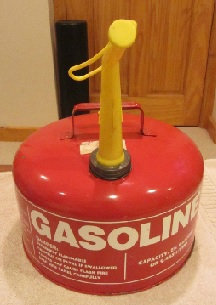
A start-up company in Houston offers gas price hedging at a year at a time. For a monthly fee, they will pay you when the national average price of gasoline rises above a fixed price. This way, you are protected from a spike in gas prices. You can budget more confidently for the year because you have a cap on your out-of-pocket costs for a rising price of gasoline.

Of course, it would be better if they hedged for a longer time, like two years, but I presume their hedging program is most liquid at a year or less. For a nominal amount of money, you may consider hedging for your personal or small business gasoline usage.

First, do the arithmetic regarding your gasoline usage and match it to the hedges that they offer, and then determine if the cost is worth what they are charging you to hedge that dollar amount.

LoveMyGasPrice.com

Are you maximizing your credit card benefits?

credit cards

What extra financial benefits are you getting from your ordinary spending? When you pay for them with a credit card, and pay the entire balance off each month, then there are many credit card benefits to choose among: cashback, points, miles, or charitable donations.

How to decide among the dozens of card programs? First, you need to get an idea of which rewards are the most important to you: airline miles to Hawaii for a vacation, hotel points for upgrades, college savings for your kids, straight cash back, or several others.

Second, you need to funnel as much of your spending through your credit card as you can. This can be more a little more complicated with cashback cards. This is because they cashback cards commonly reward different cashback rates based upon what type of expense it is: groceries, gas stations, pharmacy, or a specific store, etc. In this case, map out your common spending pattern to determine which cards offers the highest rates on the categories that you use the most. Another complication is that some rewards points are capped at dollar amounts for certain categories, so you’ll have to switch to another card once you have reached a cap on a high-reward category.

In addition to reward points or money, when you make a purchase with a credit card, then you normally get several more benefits over paying with cash:

  • Price Protection, allows you to apply for a refund if the price falls after your purchase
  • Extended Warranty, an automatic 1-year product warranty or adding a year if you purchase 1 year.
  • Dispute Rights, another party in between you and a retailer if there is a problem.
  • Travel Benefits, free car rental/collision insurance, travel insurance, discounts on car rental, etc.

Call your credit card company to be certain which additional benefits they offer and how to use them.

You are going to be spending money throughout your life so you might as well funnel those expenses through a credit card that provides you the most financial benefit from what you are already doing. I’ve received around $2,500 in credit card cashback rewards over the couple years in addition to 2-free first-class flights that I just used. If you are able to pay your credit card balances off every month, then you may likely find ways to get even more credit card benefits than I have been receiving.

Avoid advances on your tax-refund

refund advance

Tax filers that are eager to get their tax refund are increasingly getting an advance loan on their refund. According to the IRS, over 20 million took loans against their tax refund. Many tax preparation service providers make it convenient to get a loan on tax refunds they are filing for customers.

If you are anxious to get your refund, then I recommend that you don’t overpay the government in the first place! Correct your withholding deductions and keep your money instead of loaning it to the government for free. If, for some unforeseen reason, you end up being owed a refund, why hand a chunk of it to a lender to get it just a few days sooner? A refund advance is a personal loan, and like any personal loan, a financial mistake that leaves you poorer with charges and fees. Since this advance is a short term loan, normally 10 days, the annualized rate customers are charged on these loans can be an astronomical 200-700%.

Charges for refund advances include: application fee, electronic filing fee, administrative fee, pre-paid credit card fees, and possibly an interest rate charge as well. A consumer advocate group says many low-income filers didn’t even know that they were getting a loan on their refund, they thought they were receiving their actual refund!

Fees on these advances have become so egregious that competition is increasing and regulators are beginning to look at them. However, because the fees are mingled among tax return preparation fees, most customers find everything tax-related murky and just pay the fees to get their money sooner. Please do not let this be you as well.

Gold is a hedge for your home currency

gold coins

In my opinion, gold is not an investment but a currency. Although it can be used for investment speculation, this has not been its main financial function over the thousands of years of its financial use. In a world where politicians and central bankers cannot stop printing money that debases paper money, gold is poised to remain a strong currency.

A year does not pass where there is a currency collapse (defined by a +50% drop in value) where residents would have been far better off if they had held some of their money in gold as a hedge against currency collapse. These currency collapses can occur in a single day or week, but they are never a surprise when they happen. Either government mismanagement or military conflict generate these currency collapses.

In 2014, there were several currency collapses: Russia, Ukraine, Nigeria, and Argentina. Since 2012 there were many others: Egypt, Iran, N. Korea, Syria, and Venezuela. (Even bitcoin had a currency bubble that peaked in 2013 and collapsed in 2014.) Plus, there are sporadic minor currency collapses like the Japanese Yen that has fallen 38% over the last three years.

In almost every case, there was an inciting event that caused an immediate effect on the currency, perhaps a 3-5% fall in a single day. When there is a currency issue, it will be all over the news and people will be talking about it. Then, as events become worse, the currency begins a slow decline over weeks and months until residents find that their money only buys half of what it used to; or less. Once the currency begins a drop, the government suspiciously announces capital controls that include: the government controlling all currency rates, banning gold exports, and sometimes gold trading.

Holding some of your savings in any stronger currency would benefit someone whose home currency is at risk of falling. Gold happens to be one of these stronger currencies during these times with a long history of holding its value.

Promised social security payments cut by 24%

retirement mug

According to the Social Security Administration, their trust fund entered a state of permanent annual deficits back in 2010. These deficits are expected to increase each year, similar to every Ponzi scheme that is doomed to fail. On current social security statements that are mailed to taxpayers, it is written that, “Without changes by 2037, the Social Security Trust Fund will be exhausted and there will be enough money to pay only about 76 cents for every dollar of scheduled benefits.”

This cut is a drop of 24% from what social security has scheduled to pay you. Remember, this is a government entity with a history of financial projections that are overly optimistic and revised downward every year. So the 24% pay cut will very likely be more severe and start sooner than their current prediction.

We are all faced with the increasing probability of declining social security payments, postponed retirement start dates, or additional new regulations like means-testing (reducing your social security payment based upon your other income or net worth). This highlights how important it is for you to be responsible for your own financial future by saving on your own for retirement. Successful retirement and early retirement are based upon up-front financial planning and a high rate of savings. For example, a minimum amount of money that you should be saving for retirement is 15% for your income over your entire career. This 15% is based upon studies of successful retirees and can either be pre-tax money with your employer or post-tax money into a Roth IRA that you setup on your own. Mapping out your financial life will determine if this 15% retirement savings rate is too high or too low for your specific circumstances.

Money that you set aside on your own is money that you control, unlike social security or pensions that are controlled by politicians. Money that you control can:

  • Earn more by investing more appropriately
  • Be placed and invested where its tax liability is lower
  • Will not be reduced by the management failures of politicians

The important element is to consistently save at least 15% of your pay, make it a routine, and invest the money prudently rather than speculatively.

All financial benefits are created by living below your means

atvs

I was assisting a lender in evaluating private loan applications and we came across two sad and surprising situations. There are two real couples in their early 50’s, one couple has blue collar jobs in the country and one couple has white collar jobs in the city, but both are sprinting toward financial calamity. Both couples earn a high income but are confused about why they cannot save a penny for an emergency fund, let alone a retirement account. It is an easy problem to diagnose: neither couple is willing to control their lifestyle spending. They are behaving just like 20% of Americans who spend more than they earn; according to a 2014 study by the Federal Reserve.

Couple A: their combined income is a little over $110,000, she is a nurse and he is a machinist. Their combined income is a lot of money for the rural area in which they live. So where is their money going? They both drive brand-new leased pickup trucks, and lease new ones every two years. They rent their home and it has an outbuilding chocked full of toys: jet skis, a boat, snow mobiles, and ATVs. But all of these toys are purchased on credit, they have no equity in anything they own. Each summer, they rent a cottage on a lake for weekend trips.

Couple B: their combined income is a little over $140,000, she is a professor and he works at a consulting company. Their combined income doesn’t go as far in their expensive city, but it should be far more than adequate to support this couple who have no children. So where is their money going? To appear successful, they rent a much larger apartment than they can comfortably afford. They eat out every single night, normally at expensive restaurants with their friends; and shop without a thought to the cost. They take at least one very expensive vacation each year.

Both couples have very different lifestyles but their finances are identical: no home ownership, no savings at all, no retirement accounts, and large credit card balances. The country couple don’t see a big financial problem yet while the city couple is beginning to suspect there is something wrong because their peers are talking about affording an early retirement. Both couple A & B have the same problem: they spend all of their income, and sometimes more. This leaves no extra money for normal expenses like maintenance, savings, emergency fund, vehicle replacement, or retirement.

Most people are unaware of financial ratios, savings targets, or where to get personalized advice on these matters. Only when finances reach a breaking point do most people re-assess their spending to appropriate levels for their income. Please follow the model of the financially literate by living below their means and actively map out their financial life to avoid any financial crisis in the first place.

A large tax refund is a financial failure

tax refund

Although 75% of people that pay income taxes look forward to receiving a large income tax refund (over $3,000), all of the arithmetic points to this tactic as being a financial mistake.

Current income taxes for federal and state returns combine for 50% at the top rates. For medium and high income earners, income taxes are the largest obstacle to saving and accumulating money. If you do not actively reduce your tax burden, then it is like handing the IRS a cash ‘tip’ of thousands of dollars a year.

Your tax planning should include strategies for tax minimization but also for creating a minimal tax refund. What are some reasons why it is not in your best interest to get a large tax refund?

  1. You are delaying access to your own money that you have already earned. This is money that you cannot spend, invest, donate, or save until you receive it back from the government a dozen months later. Why would you do this?
  1. The most common reason people want a large refund is because it is a lazy way to save or afford a large purchase. Unfortunately, this is a costly way to create a random-sized lump of money – instead of a controlled amount of monthly savings to hit specific savings targets when they are needed. The financial literate have tiny tax refunds and map out their savings needs to make certain they occur.
  1. This money is a free loan to the government, at your personal expense. Federal, state, and local cities are already warning that there will be refund delays this year from late tax changes and they claim to be perpetually underfunded and understaffed. Again, why are you actively allowing a government bureaucracy to decide when to release your own money back to you?

What would the government do if roles were reversed and, instead, you held onto their money for a year? You’d pay steep penalties, plus interest, and be audited by the IRS forevermore.

Plan your taxes and use the IRS withholdings calculator to minimize your refund and get your money under your control for your maximum benefit, not theirs.

First-time homebuyer assistance programs

calculator 1

There is a website that aggregates down-payment assistance programs from across the country. There are just under 2,300 assistance programs in the U.S., but most counties have between 5-20 programs, depending on your circumstances and the types of homes that qualify. The company is Down Payment Resource and RealtyTrac claims the average down payment assistance is $11,565.

Down payment assistance can take several forms: credits for closing costs or low-interest loans that are forgiven the longer you remain in the home. In addition to down payment assistance, the Federal Housing Authority that purchases mortgages lowered their down-payment requirements from 10% down to only 3%-down mortgages.

To see if you qualify for one of these programs, search their website at:

http://downpaymentresource.com/are-you-eligible/

Or get more information from RealtyTrac:

http://www.realtytrac.com/news/realtytrac-reports/down-payment-assistance-analysis-q1-2015/

The dangers of a mortgage mismatch

interest rate futures

Today, there are Russians having their homes foreclosed upon because their mortgage is priced in U.S. dollars while their home currency that they earn money in, the Russian ruble, has lost half its value in the last 6 months. During the 2008 financial crisis, Icelanders were foreclosed upon whose mortgage was in Euros while the Icelandic kroner collapsed in value. Romanians are protesting because many took out mortgages in Swiss Francs which jumped up in value. And finally, U.S. homeowners with variable interest rates lose their homes when their mortgage resets at a higher interest rate.

All of these foreclosures are predictable and preventable mistakes by the financially illiterate. In each instance, the borrower tried to lower their mortgage payment a tiny speck by taking on giant additional risks that they could not manage or afford. In these cases, they were pushed out of their home by something they could not control; either a move in currency rates or interest rates.

Matching assets and liabilities is a banking-101 concept of aligning a loan to a particular asset. In the case of a mortgage, when you take out a loan against a large asset, that loan must match the earning currency to make loan payments and not reset the interest-rate during the time frame you are planning to own the asset. When you take a mortgage tied to a foreign currency, you’ll lose your home if either your home currency falls (the money you are earning becomes worth less) or if the mortgage currency rises (your loan payments and balance become worth more). This is a giant mismatch that you should avoid or know how to professionally hedge. Be aware that hedging may only be able to protect you for a couple years while the mismatch could be for far longer than that, still forcing you into foreclosure.

Another mismatch is the timing of owning the home. When your mortgage has a variable rate it is always likely that it resets at a higher rate than today, possibly creating an unaffordable payment for your income. Interest rates typically move down slowly but jump up very quickly, likely quicker than you can re-finance to lock in a lower rate. How long do you plan on owning the home? If you plan on moving in 2-3 years, it is fine to take out a variable rate loan that will re-set in 5 years because you will have sold the home by then. But if you have no plans to move, 5 years later who knows where interest rates will be and you may have an unaffordable mortgage that eventually forces you into foreclosure. Realize when you are foreclosed upon, you lose all the equity that you have paid: down payment, home improvements, and the loan amortization – all of these will be gone. (For most retirees, 70% of their net worth is home equity or a paid-off home so they can actually afford to retire.)

So make certain your mortgage matches your home currency and the length of time that you plan on being in the home. Avoid these two predictable landmines that will force you from your home by trying to save a couple dollars in monthly payments.

Menu Title