Personal Finance Archives - Page 15 of 20 - Financial Literacy

Archive for Personal Finance

Are you ready for a currency collapse?

flags

In the last year, there have been many currencies that lost a significant amount of value:

  • The Russian ruble has lost 34%
  • Argentine Peso lost 24%
  • The Norwegian Krone and Swedish Krona both lost 14%
  • The European Euro lost 13%
  • The currencies of Japan, Israel, Poland, and Czech Republic have all lost 10%
  • Even the Canadian dollar lost 9%

In each of these examples, natives in these countries and currency holders would have been better off by holding their money in any other stronger currency; even gold made a small profit against nearly all currencies.

Since currency prices tend to move in a trend (it takes time to reverse structural forces or central bank policies), once a currency begins a move over 5%, in my experience, it tends to continue in that direction. What to do when your home currency is at risk for falling more than 5% to any of the major currencies? It is time to consider moving some of your money into a stronger currency.

It has never been easier to move some of your money into other currencies:

  • Through most brokerage accounts you can use exchange trades funds or currency funds.
  • Everbank offers certificates of deposit denominated in several currencies or baskets.
  • European and Asian banks commonly offer multi-currency accounts.
  • Some multi-currency accounts also permit holding ounces or grams of gold.
  • Buying the stock of a company whose predominant sales is in the currency of your choice.
  • Note that the worst exchange rates continue to be at airports and train stations.
  • Bitcoin can move up and down +10% in a single day, so it is not a stable location of value.

Your home currency is very important – whether it is facing a 10%-50% loss of value, goods are going to be increasing in price. If you have no currency hedge then you will incur the full loss of your money; while those that have held some stronger currency will have more financial options.

Another opportunity to re-finance at very-low rates

mortgage rates

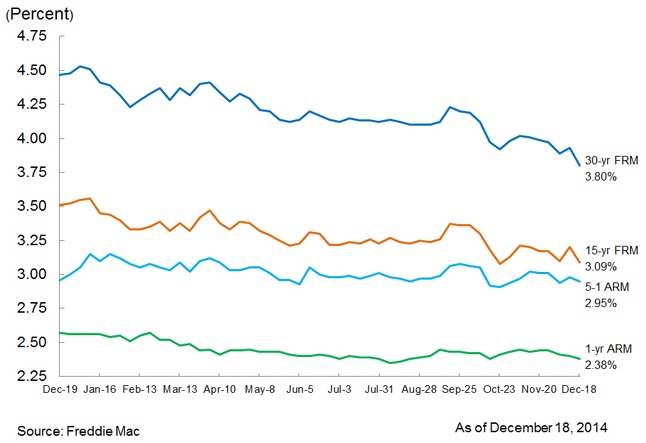
Mortgage rates have been trending down all year and are just under 4.00% today for a 30-year fixed mortgage. Many people missed the opportunity in January 2013 when rates dropped all the way down to 3.50% before they shot up to 4.50% a few months later.

Now is your chance to grab some cheap money before rates pop-up again. Rates are so low that some people can move from a 30-year term down to a 15 or 20-year term with a monthly payment that is the same or lower that their current payment.

Another consideration is if you have any debt with a rate higher than 4%. You may want to consider rolling this debt onto your mortgage to lower your interest expense.

Like any financial move, there are elements you need to consider:

  • Will you spend your interest savings or use it to pay down principal each month?
  • If your debts are moved to your mortgage, will you rack them back up again?
  • Can you knock out small unsecured debts without adding them to your mortgage?
  • By putting the new monthly savings toward reducing the principal loan balance, would you be increasing payoff length of your mortgage?

Managing any debt, no matter how small, requires discipline or it can ruin your credit rating and your net worth. Managing larger debts and a mortgage requires more diligence at budgeting and planning or you can potentially lose your home. If you do not have the psychology, budgeting, and discipline then there are painful lessons if you open credit cards, let alone car loans or mortgages. Contrarily, there are financial benefits for conservative use of loans:

  • Credit card loyalty programs benefits
  • Home ownership
  • Income producing real estate
  • Income producing business assets
  • Access to emergency funds with credit

With interest rates at such low levels, now is a good time to examine all of your debts and determine if you may be financially better off by refinancing them today.

What are you doing with your gasoline savings?

gasoline nozzle

The price of crude oil has fallen by 30% since the summer. Depending on your state’s gasoline taxes, the average person will spend $525 less on gasoline in 2015.

So what are you going to do with your extra $525? In my opinion, the same thing that you should do with all unexpected income: divide it into portions and make certain that some of those portions increase your net worth.

Whether you receive an inheritance, win a prize, receive a gift, or in this case, have an expense drop, you have two main choices: spend it all or save it all. Of course, the most prudent action is to save it all and then only spend some of its investment income. But to be realistic, most people will spend some portion and hopefully save some portion. This savings can go toward: paying down debt, adding to a retirement or college savings accounts, or some other net-worth building location.

The reason that you should use some of any unexpected money to add to your net worth is because: anytime you can improve your net worth for free, then you should do it. Extra income or a reduction in your expenses allows you to increase your net worth without money being taken from your routine budget. If the price of gasoline were to shoot back up tomorrow, then what would you have to show for 6 months of lower prices: something or nothing? Adding to your net worth is the only way to permanently benefit for the rest of your life from an unexpected gain.

In the case of dropping gasoline prices, you could also set some of this $525 aside as a reserve to pay for higher than average gasoline prices when they go up again. Or, you could do what the airlines and trucking companies do, hedge your gasoline price. One way to do this, as a small retail investor, is to purchase an exchange-traded fund (an ETF is a fund that trades just like a stock) that tracks the price of gasoline. If you buy some of this ETF periodically as the price of gasoline is falling, then you may be able to sell it for a profit as gasoline rises. This profit will help offset your fuel expenses later – if and when prices move higher.

For some people, $525 may not be a lot of money. However, these concepts apply to any amount of unexpected income. Whatever you decide to do with your $525 windfall, it will have a permanent impact on your net worth. Do you want it to be favorable, neutral, or unfavorable? The financially literate will move this money in a way that is certain to be favorable to his or her net worth.

Financial illiteracy is needlessly expensive

spreadsheet

Part of financial literacy is mapping out your financial life, including forecasting your cash needs into future months or years. For people who have not completed this task, they do not know what they can or cannot afford to spend. When you are spending in the dark like this, it is highly likely that you are overspending in areas that are starving other areas. Those areas that are starved for funding or savings will needlessly become financial crises. These financial crises can take many forms, for example, being unable to afford: A replacement car, home repair, medical procedure, replacement computer, holiday gifts, and the big two expenses – college and retirement.

Another task list for financial literacy is an annual oversight routine. Without this you may be needlessly under or over insured, have an obsolete estate or tax plan, and allowing mistakes on your credit report. Missing this annual review needlessly allows expenses or financial risks to grow hidden from your view.

Another aspect of financial literacy is taking care of the details of financial paperwork. For example, I assisted a woman who received a financial gift and called me to figure out how she was ultimately left poorer with a bad credit rating. This woman inherited some money to pay off the small remaining balance on her home mortgage. Unfortunately, she did not know how to do this and she did not ask anyone for help. She mailed in the extra money to her bank and assumed that they would handle the payoff correctly without any instructions. Instead, the bank held her extra payment in an escrow account. So she missed mortgage payments so that fees and interest charges piled up; plus they reported the missed payments on her credit report. Her financial mismanagement needlessly turned a gift into a curse.

No matter which part of financial literacy may be missing from your normal money management, there is a steep price to be paid. Either spend a little time managing your financial life or you will certainly be paying needless extra costs in many areas of your life.

How well is your net worth growing?

Your net worth is calculated by subtracting all of your debts from all of your assets. If you are hopefully adding to your assets each pay period and paying down your debts each pay period, then your net worth should be on some sort of upward trajectory over time. One reference point for how well you have been accumulating your net worth is to compare to either your peers in age or income.  The tables below show the median net worth values from the 2013 Federal Reserve survey.

net worth charts

A median number is calculated by half the people being above the number and half being below. Since these net worth values include mostly people who have little financial literacy, you may want to use them as a minimum target, and strive for a significantly higher number.

Why is net worth important? Because the more net worth and investment income you have, then the bigger the buffer and flexibility you have to withstand the unexpected financial expenses of life. There may be a time when you will be unable or unwilling to earn active income, and if you do not have a sufficient amount of income then important parts of your life will become painfully underfunded. On the upside, the old phrase “the rich get richer and the poor get poorer,” partially refers to how much you have in investments. The higher your amount of investments then the more you can leverage your personal gain from economic changes. For example, when you have a home, you can benefit from rising real estate values; when you own stocks, you can benefit from a rising stock market; etc. Sooner or later you will be seeking the option to retire from working. Building your net worth and investment income is the most certain way to make that happen.

U.S. government promoting home ownership nightmares again

house1

Homeowners provide many benefits to communities so governments prefer a high ratio of homeowners. Studies have shown that, in general, homeowners:

  • Promote social stability
  • Increase educational achievement of children
  • Increase civic and community participation
  • Commit less crime
  • Are less dependent on government assistance

Unfortunately, government policy makers repeatedly confuse the cause and effect of these home ownership benefits. The home, itself, does not change people into having these behavioral traits. Instead, there are people, who have behavioral traits with these societal benefits, which just so happen to also make them prone to home ownership. The act of moving from an apartment to a home did not change the person into having those traits, those traits just so happen to be embodied by people who successfully own homes.

But government administrators hope that societal benefits will magically appear from people who do not yet have the financial stability or behavioral traits to be a successful homeowner. So they find ways to artificially lower the barriers to purchase homes, erroneously thinking societal benefits will accrue from this (or cynically, increase their chance of re-election victories).

When the government tries to pre-maturely turn a renter into a homeowner, in general, these families lose the home and end up financially worse off than before they bought the home. This has already happened in Europe, Britain, and the U.S. when government officials try to get people onto the property ladder before their time. Most recently, the federal government did this in the early 2000s and it resulted in a real-estate boom and catastrophic collapse that left the country in an economic depression. Taxpayers then bailed out the government mortgage agencies with $187 billion.

The federal government is at it again this month by issuing new regulations:

  • Down payments can now be as low as 3% when they used to be 10-20%.
  • The allowable Debt-to-Income ratio has been increased from 36% to 43%.
  • Personal credit-ratings will be inflated because medical bills are no longer included.

While every situation and real estate region is different, these broad national rule changes will allow many people into homes who cannot afford them. When you cannot afford your home, there are predictable financial consequences, all which are unfavorable and painful, that also include being eventually forced from the home. Just because you can qualify for a loan does not make that loan a wise financial decision or a benefit to society. Make certain that all of your purchases are affordable, meaning, you must also be able to afford all of the predictable repairs and maintenance required for that item. Decide on your own what home and lifestyle you can afford by financially mapping everything out. Do this so you don’t become a victim to yet another government policy that is not in your personal best interest.

8 financial reviews for year-end planning

2015 signAs the clock runs out each December 31st it is advisable that you prepare your finances with a beneficial year-end review. While I am not a tax-attorney and cannot offer specific advice, below are items that you and your financial advisers may want to evaluate as each year-end approaches.

1) Employee Withholding Tax:

  • If your employment or withholding situation has changed over the year, make sure that you’ve paid enough to the federal government to avoid underpayment penalties. Or, make any adjustments for next year.

2) Qualified investment accounts (401(k), IRA, Roth IRA, 529, etc.):

  • Complete any annual contributions to (or mandatory withdrawals from) retirement accounts
  • Complete any annual contributions to tuition-education plans.

3) Health Expenses:

  • If you have met your annual insurance deductible, if possible, get any additional medical procedures before year-end.
  • Make use of any remaining money in your flexible health spending accounts.
  • Evaluate getting mandatory health insurance or paying the IRS penalty.

4) Donations and Gifts:

  • Use your $14,000 annual gift exemption that is tax-free.
  • Complete any financial contributions to charities for the year.
  • Complete any donations of physical items to charities for the year.

5) Investments:

  • Find potential investment capital losses to offset any capital gains that are taxable for the year.

6) Timing of Payments:

  • It may be financially beneficial for you to accelerate or defer deductible payments from next year into the current year.
  • It may be financially beneficial for you to accelerate or defer income from this year into next year.
  • Categories for these item are flexible income sources, unreimbursed employee expenses, medical payments, estimated tax payments, or charitable contributions. Be aware that certain deductions need to pass certain thresholds or are subject to deduction limitations.

7) Affordable Care Act (Obamacare)

  • There are very steep cliffs on subsidies for mandated health insurance premiums. A small $50 in your reported taxable income can make a $5,900 increase in your net tax liability. Mapping out the Obamacare subsidy thresholds and your taxable income is critical to analyze now.

8) Washington’s last minute tax changes

  • Some of these may apply to you and increase or decrease your tax liability. Be aware of pending items Washington may act upon so you can adjust your planning to take advantage of these changes.

You may have additional issues to evaluate for your particular circumstances, but always address them before the year-end to optimize any tax-consequences for the year.

Student loans are haunting retirees

college savings

In 2013, there was $18.2 billion in student loan debt owed by senior citizens. These were not loans taken out for their children or grandchildren – these were loans for their own college education several decades earlier. You may know that student loans cannot be discharged by bankruptcy and so federal government loan agencies are now garnishing retirement social security checks in order to pay these delinquent loans back.

When student loans are delinquent, the account balances continue to grow with interest charges. Over months and years, these balances accrue into amounts that are many multiples of the original loan. These financial calamities could have been avoided with some financial literacy before any loan is taken. For example, what kind of degree are you funding? What is the average starting salary for that type of degree? What is the average salary increase for new hires for the first few years? This information is needed to determine the maximum amount of student loan debt that you could comfortably payoff within 3-5 years. There are some specific rules in my book for affordability, but you must try to assess:

  • How much money you’ll need to complete your education?
  • How much you can contribute?
  • How much do students earn from this school with this degree?
  • How much student loan debt this salary can support?
  • What are student loan rates and specific rules today?
  • Are there more affordable education options for me?

Whenever there are horror stories about student loan debt, they all start with both the student and their parents having no financial literacy. The problem is never the loans but the financial illiteracy surrounding their decision-making. When you don’t understand money and start dealing with big numbers, particularly with interest-carrying debt, then a financial crisis is increasingly likely to occur.

You need financial literacy to make any significant financial decision; especially with potentially dire consequences, such as painful student-loan garnishments are for retirees today.

Avoiding 5 store credit traps

albert gartmann painting

Consumer items purchased with debt is forbidden for the financially literate. However, for most people there is a gap between wants and needs that is foolishly bridged with store credit to make purchases. Items like furniture, electronics, appliances, and clothing are routinely bought with store credit with payments over time. Some lures for store credit include: zero-percent down, “we’ll pay the taxes,” no interest for the first year, and others that entice buyers into poor financial choices.

Once you have made the purchase and signed the contract, only then do buyers notice several items in the fine print that were not trumpeted by the store salesperson as you were making the purchase.

Here are a few of them:

  1. Credit Life Insurance – this is an expensive add-on charge that will pay off your loan if you pass away. You may already have an estate plan that takes care of this, but even if you don’t, this is the most expensive life insurance and should be avoided.
  2. Retroactive Interest – if you are late on a payment, then all of the low or zero percent interest that you were so pleased about launches to a high rate and is due immediately. This is also called deferred interest. Some contracts charge 25%-30% interest on the loan balance if you don’t pay the full balance off by a certain date.
  3. Due Date Change – you’ve been paying your bill on-time and it becomes a habit. But once principal payments are due, the credit company moves the date up 10 days, you don’t notice, and now your routine payment is late and you are forced into a much higher interest rate plus late fees.
  4. Mixing Credit Charges – you make a purchase with special low terms but also buy other items with the card periodically. The low-term purchase will get mixed with the high-term items and you end up with no financial benefit at all.
  5. Amount Due is Misleading – some bills include interest or a late fee, as if it were already late, and put this false number as the “amount due.” If you don’t notice that it is incorrect then you are over-paying your bill each month.

If you pay your credit card or store credit line in full when you receive the bill, then you cannot get hurt. This way, you gain all of the points, credits, discounts, and membership benefits that come along with the card. If you pay credit minimums you open yourself to all kinds of problems like reducing your net worth from excessively-high interest rate charges and potentially a poor credit rating.

Beware of car loans with “add-on” interest

mini 3

The vast majority of car buyers take out loans to buy them, many lease, and few pay cash. (Guess which of these three funding methods is the only correct answer for the Financially Literate.) What many car loan contracts include is something called, “add-on interest.” You should never sign a contract that uses this term because you are charged interest twice and have no ability to save money by paying the loan off early.

A normal loan charges interest on the remaining balance of the loan. So the longer that you have had the loan and have been making payments, the more the outstanding balance decreases and your interest charges correspondingly decline as well. This is also called an amortizing mortgage where the outstanding balance declines as principal payments you make reduce the remaining balance on the loan. In contrast, an “add-on interest” loan adds the interest expense over the life of the loan onto the principal balance first and then spreads payments out over the term of the loan. The result of add-on interest is higher interest charges plus you cannot pay it off early because the loan balance includes interest charges.

When there are any unusual loan covenants or payoff schedules, you can be certain these benefit the lender and not the borrower. I know someone who tried to payoff one of these add-on loans early, and because of complications, she ended up with a lower credit rating because of add-on interest payment confusion with a regular loan. If you must use a loan to buy a car, when you shop around don’t forget to compare loan terms as well as the loan rate.

Menu Title